
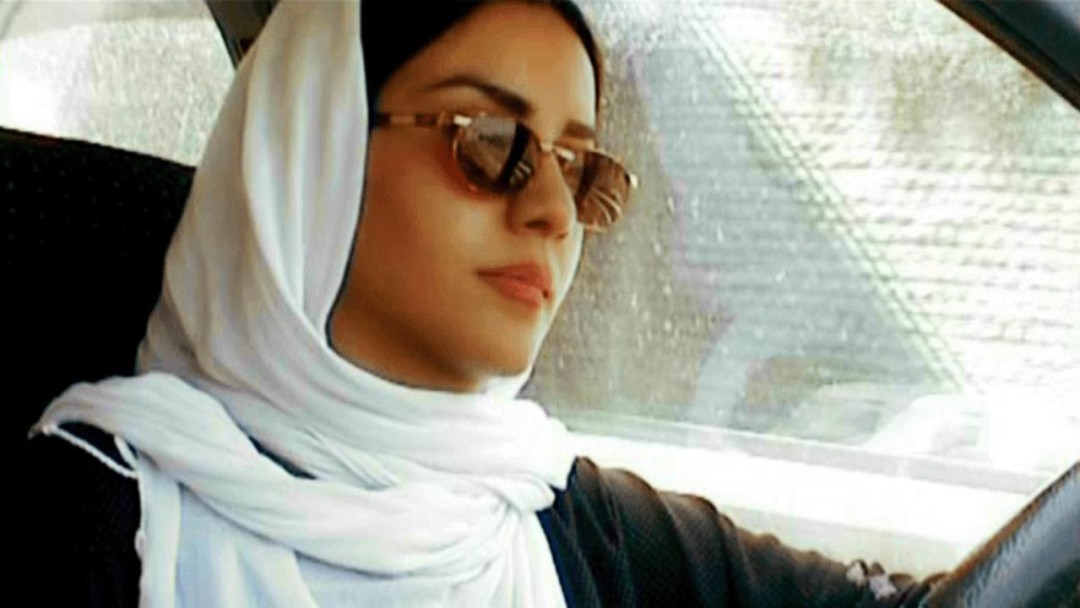
Dah (Abbas Kiarostami, 2002)
Diverging from the widely reflected directorial position and returning to the aesthetic considerations of documentaries, Kiarostami was often ready to renew not just stylistically, but also in terms of natural interest. This movie was the first step towards the minimalism which characterised a certain period of his in films such as Five Dedicated to Ozu (2003) or 10 to Ten (2004). These films, regardless if they were documentaries or feature films, were made with the attempt of abolishing the direction,[1] and as a formalist gesture this approach reached its final peak with 24 Frames (2017). Another novelty of the film was the female leading actress, which was very atypical of Kiarostami as all his previous films were focusing on men.[2]
Dense Encounters
Structurally, the story is based on ten encounters of a female chauffeur with several people in her car. All of these situations feature two actors presented in separate close shots, recorded from the windshield or the dashboard, resulting a very intimate atmosphere. Most of the people appearing are in a very close relationship with the Driver, almost making the audience feel an impolite intruder. All these relationships reflect upon the situation of the woman in Iranian culture, presenting women from different social status with very similar problems. The Driver comments actively, sometimes passionately on every complain she is told, insomuch that at times she asks like a psychologist. Since the basic idea of the movie was to show the sessions of a psychologist in a car, this behaviour is not surprising at all. This way the interconnections between the passengers and the Driver come to light, they truly intervene in each other’s lives, sometimes without even noticing the weight of their impact.
Among all the characters, there is only one male figure in the film, the Driver’s child, Amin. The three sequences between the two of them reveal a complex personal conflict of the Driver, while the problem presented in this relation seems the most general one. The mother as a photographer – played by Iranian painter and director Mania Akbari – travels a lot so she cannot fill in the role of a woman at home, in a traditional hand of family. Partly for this reason he is criticized by her son, and unable to satisfy the expectations she has to face.
By some critics he was taken as the embodiment of the adult masculine oppression,[3] while there is another considerable aspect highlighted by Rolando Caputo, namely the semblance between mother and son. They are „not altogether temperamentally dissimilar, both are rebellious and argumentative. And then, observe their body language, the sometimes similar way they use hand gestures.”[4] They also share some kind of disrespectfulness towards each other, at some moments we might feel that the reactions of the mother are as assurgent and unfair as the child’s. For instance, she keeps shouting at him, trying to make use of the short period of time she has to be with her child in the car, to impress him, even though Amin asks her several times to stop. She looses control over the situation, she is not able to react with the efficiency she can in other situations, but this time the source of her behaviour is an elemental despair and hopelessness, which is implied in Iranian society.
The Richness of Minimalism
While Ten is an undoubtedly restrained film regarding the use of space and characters, without any kind of stylistic extravagance or abundant symbolism, it still has some significant tools which get the film to a more expressive and formally conscious level. The most visible gesture is the visual stressing of the structure by using inserts, which also brings up the paradox of telling a linear story of circular life – the countdown[5] leads us to nowhere, nothing changes, nothings gets resolved, and it especially makes us feel that way by framing the story with the episodes of the boy. He appears at the beginning, at the middle and finally at the end of the film but it would be hard to notice any significant alterations in their relationship. „Nothing gets resolved between the two of them, and therefore one almost anticipates another spin at the wheel.”[6] This spiralling nature of their travels seems to be a nightmare for the boy, who is forced to participate in these conversations framed by wall-to-wall shouting, and a vicious circle for the mother, who simply cannot pull out her child from the dynamics of the patriarchal society.
Thinking back to the previous male youth presented in Kiarostami films complicate the interpretation of this character even more. Since all the children in Kiarostami’s previous films had been exposed to the adults, or at least they were defenseless against their own fears, it is easier to notice how awful the situation of the son is. He also has to face expectations, choose between role models, and indorse his will from a limitated position a child has. His genuine fury, the absurdity of the whole situation and the presentation of the mother figure all lead to the interpretation of Amin’s character as another victim of Iranian society.
As another fundamental formal trope of the film, the constant play with the vocal and pictorial elements, the „pattern of »on-screen figure/off-screen voice«”[7] becomes a remarkable directorial gesture in almost every sequence of the film. In two particular cases this trope is the basis of the dramaturgical structure, as one of the characters remains off-screen throughout the whole episode. One of them is the very beginning of the film, when Amin sits in the car and the camera stays on his close up resulting an ambigous relation with both of the characters. While at first glance Amin’s rage might seem repulsive it also evokes empathy, and the mother’s non-visibility might generate a certain sense of distance but at the sime time it underlines her impotence. The other episode this trope dominates is the sequence with the prostitute. The practical reason of the lack of the prostitute’s picture might be that Kiarostami could not convince an actual prostitute to perform this role. Trying to conserve the reliability of the scene, he built in the stucture of the dialogue the conversations he had with real prostitutes. Completing this realistic approach, the lack of the on-screen presence of the prostitute produce a particularly sensual scene and an arrestive atmosphere filled with the hectic nervousness of the prostitute’s voice and the darkness of the Driver’s pure face. This is the only night episode so we first come to see her without sunglasses covering her face.
Woman at the Wheel
The journey, and the car especially is among the important symbols of Kiarostami. Most relevant in Life Goes On and Taste of Cherry it appears as a tool of the central character facilitating motion, presenting the individual separated from the others, in both cases underlining his position as an outsider. In addition to that, the circular character of these stories appears in the movement of vehicles. „As in the opening circular movement of the driver in A Taste of Cherry (1997), like the film itself as it circles round and round the idea of suicide. Or the image of a steep incline in the road in And Life Goes On…(1992) that finally results in one of the most sublime concluding shots in film history as the car slowly yet persistently inches its way up that seemingly impossible incline in its attempt to get to the hill top.”[8] In case of Ten the female figure of the Driver adds another layer to this circularity, freedom and autonomy of motion.
For her being a chauffeur simultaneously symbolizes her progressive way of thinking and summarizes the essence of her life, motion, which is necessary for her work, but retains her from living a socially acceptable life. The Driver’s liminal position is concentrated in the car, a non-public place, which sometimes gives a refuge to women, for instance her friend removes her veil only in the car. We are limitated to the inside of the car as „10 is the first of Kiarostami’s films that doesn’t allow for any external shots of the car as it makes its journey,”[9] picturing sensitively the restricted position women have in society. While this sense of limitation is crucial in the film, the Driver in the car has a direct contact with the public arena of the city. She sometimes reacts to the traffic on the street, moreover, the scene when she helps to the elderly woman to get to the mausoleum or the other scene in which she picks up a prostitute base the Driver’s close contact with the people of the street.
As far as the spacing of the female character is concerned the theory of the flâneur might be a considerable viewpoint to take. Although this term emerged in the 19th century in Paris, it raises some aspects of how social hierarchy can be present in the arrangement of the city. The fundament of this concept is Baudelaire’s symbolic male character, the flâneur, who is an independant stroller of the city, thoroughly knowing and occupying it. Through his figure, the notion of modernity is expressed, as he is the passionate spectator, the only ruler, who feels free and comfortable in the city. Women became excluded from the streets of modernity, legitimized by the idea of that „any woman walking alone after dark invites trouble.”[10] Separated from the relatively dangerous city, women had limitated space, home was thought to be their original place.
Given this context, it seems impossible to imagine a female flâneur on the streets of modernity, or in the case of Ten, in a patriarchal Iranian city, where spaces imply certain determinations and, for different genders, different rules regulate spatial operation. In the film, the accessibility of public spaces is also emphasized in a dialogue, when the Driver explains to her friend a special occasion. On a weekday she was free to enter to the mausoleum without a chador. Then, they keep talking about the possibility of loaning a chador if one had not own one. This slightly flashes the oppression of women, but when the Driver’s friend returns in the next episode, telling her about the heartbreak she had gone through, as the expression of her inner rebellion, she reveals her bald head but only inside the car.
Getting back to the flâneuse, it is worthwhile to take a look at the episode with the girl working on the street. As an expert of flânerie, Anke Gleber discusses, an early example of the female flâneuris the prostitute,[11] who is very similar to a real flâneur, without the controlling gaze, underlining the disempowered status of these women. „Unlike the male flâneur and his gaze, the prostitute is not his female equivalent but rather the image and object of this gaze. Not free to drift along the streets, she is driven into and down the streets by pressing economic motives.”[12] In Ten the Driver picks up the prostitute at night, led by a perverse curiosity to analyze and unravel the personality of the prostitute. She replies with careless edginess, and compares herself several times to the Driver to clarify the difference between them, thematizing this kind of convulsive independence a prostitute might have, but even the roots of it go back to the elemental disappointment in men.
Conclusion
Ten is a restrained masterpiece, exploring different gender-related problems. Her being a photographer is of vast importance. The profession jointly embodies the majestic freedom associated with artistic creativity and the powerful freedom associated with the chainless flâneur cruising around. For the flâneur, gaze serves to occupy urban space, to territorialize, to select, to spot suspicious changes, to investigate the undesired. For the photographer, gaze is profession and ingenuity at once, a tool of techne used with conscious organizaiton and a tool of liberation, setting free objects, spaces, people by recognizing them in frames unseen by others. As fierce as her efforts are, the Driver can never break free entirely – because of society, because of artistic responsibility, because of maternal care, because of human nature. In this immensely substantial and dense depiction of a woman fighting desperation, Kiarostami weighs in with a rich, multi-layered portrayal of particularly social issues, artistic crisis and the inescapable traps of letting others into one’s own life – or car.
Bibliography
Ardener, Shirley: Ground Rules and Social Maps for Women: An Introduction. Women and Space. Ground Rules and Social Maps, 33. Emphasis by Ardener.
Caputo, Rolando: Five To Ten. Five Reflections on Abbas Kiarostami’s Ten. Senses of Cinema, December 2003. http://sensesofcinema.com/2003/abbas-kiarostami-remembered/ten/ (date of actual download: 2020. 04. 05.)
Elena, Alberto: All About My Mother. In: The Cinema of Abbas Kiarostami. (trans. Belinda Coombes) London: Al Saqi, 2005. p. 174.–179.
Frois, Emmanuèle: Kiarostami rencontre la femme iranienne. Le Figaro, 21st May 2002.
Geoff, Andrew: Drive He Said. Sight and Sound, Vol.12 Issue 10, October 2002. p. 32.
Gleber, Anke: The Art of Taking a Walk. Flanerie, Literature and Film in Weimar Culture. Princeton: Princeton University Press, 1990.
Gleber, Anke: Women on the screens and streets of modernity: in search of the female flâneur. In: Andrew, Dudley–Shafto, Sally (eds.): The Image in Dispute: Art and Cinema in the Age of Photography. Austin: University of Texas Press, 1997.
[1] Elena, Alberto: All About My Mother. In: The Cinema of Abbas Kiarostami. (trans. Belinda Coombes) London: Al Saqi, 2005. p. 174.
[2] Frois, Emmanuèle: Kiarostami rencontre la femme iranienne. Le Figaro, 21st May 2002.
[3] Geoff, Andrew: Drive He Said. Sight and Sound, Vol.12 Issue 10, October 2002. p. 32.
[4] Caputo, Rolando: Five To Ten. Five Reflections on Abbas Kiarostami’s Ten. Senses of Cinema, December 2003. http://sensesofcinema.com/2003/abbas-kiarostami-remembered/ten/
[5] ibid.
[6] ibid.
[7] Caputo: Five to Ten.
[8] ibid.
[9] Caputo: Five to Ten.
[10] Ardener, Shirley: Ground Rules and Social Maps for Women: An Introduction. Women and Space. Ground Rules and Social Maps, 33. Emphasis by Ardener.
[11] Anke Gleber outlined another incomplete possibility of being a flâneur as a woman. Capitalism designates shopping malls for the women providing the false sense of moving unlimitedly, this way the „department store flâneuses” emerged. Gleber, Anke: Women on the screens and streets of modernity: in search of the female flâneur. In: Andrew, Dudley–Shafto, Sally (eds.): The Image in Dispute: Art and Cinema in the Age of Photography. Austin: University of Texas Press, 1997. p. 60.
[12] Gleber, Anke: The Art of Taking a Walk. Flanerie, Literature and Film in Weimar Culture. Princeton: Princeton University Press, 1990. p. 183.

 Babos Anna