
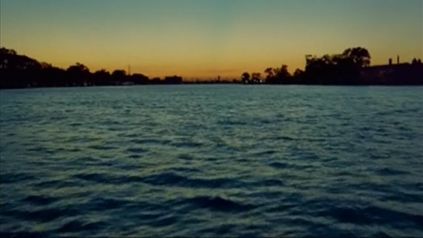
Part of my BA thesis translated in English ⋅
Certain tendencies and common motifs emerge within the stylistic and thematic diversity of contemporary Hungarian cinema. The act of returning from abroad, particularly from the West, stands out as a regularly occurring, distinct motif and its source of inspiration is one of Hungarian society’s fundamental experiences. Declaring powerful statements about the challenges of Eastern European existence, this constant presence of migration, return and mobility is Hungarian cinema’s major contribution to one of the key topics in European film. This study aims to investigate these statements by interpreting several contexts around them. The first of these contexts is migration itself, which has became a dominant social phenomenon since Hungary joined the European Union.[1] Apart from the sociological significance, the relevance of the return motif lies in its thematically and stylistically systematic cinematic representation. The underlying assumption of this study is that this representation is specific, complex, greatly varied and worthy of scholarly analysis. The main focus of this paper is to consider how the dynamic process of migration and return, as well as the social connotations of spaces and spatial motion contributes to identity formation. Firstly, the notion of heimishness will be explored, followed by the examination of non-places. Finally, the several versions and possible readings of the motif will be presented through a case study – a comparison of Fehér tenyér (White Palms; Hajdu Szabolcs, 2006) with Friss levegő (Fresh Air; Kocsis Ágnes, 2006), and Moszkva tér (Moscow Square; Török Ferenc, 2001) with VAN valami furcsa és megmagyarázhatatlan (For Some Inexplicable Reason; Reisz Gábor, 2014).
The cinematic representation of migration and return is deeply rooted in a specific social experience, thus the thorough exploration of how the theme’s social and film historical environment has changed and developed over the years is crucial. Social engagement in contemporary Hungarian cinema is believed by many to be less explicit than it was before 1989. Apart from anything else, the return motif is significant because it is a form of social engagement. This relation to a national cinematic tradition is clearly at the core of Gelencsér Gábor’s thorough analysis which studies the alterations of the motif from the 1970s and the historical context simultaneously.[2] A nearly impossible undertaking, emigration was stigmatized as treason during the Soviet period. Although portraying emigrating victims or heroes appears to be what could have been an evident way for filmmakers to criticize Kádárism, their emphasis, as Gelencsér indicates, was on the individual paralyzed in their own country. Furthermore, it’s also noteworthy that attempts to emigrate remained unsuccessful without exception in every film analyzed by Gelencsér.[3] Creating a complex web of connotations, emigration went beyond itself already in the Seventies and Eighties. More than a backdrop for sociographic investigation, stories about emigration were assets to contextualize individuals’ relation to certain spaces.
After the dissolution of the Soviet Union, and particularly since the new millenium, different problems have emerged to preoccupy filmmakers. Globalization resulted in the illusory abolishment of national borders, emigration doesn’t trigger condemnation anymore, it is not necessary or impossible, it is an opportunity but still coercive in its own way. Borders do not disappear in contemporary Hungarian films, argues Sághy Miklós in his article Towards the West!. „The geographical, topographical border became heavily associated with metaphoric and symbolic notions during the Soviet period.”[4] Preceding contemporary trends, the return motif already appears in films such as Szökés (Gyarmathy Lívia, 1997), Tiszta Amerika (Gothár Péter, 1987), Zsötem (Salamon András, 1992) or Itt a szabadság! (Vajda Péter, 1990).
This is the historical-cultural context in which the meaning of the motif develops. Before 1989 it stood for hopelessness and futurelessness. Since the regime change, it represents an opportunity that exists rather in theory, or at least an opportunity that doesn’t offer a realistic chance for the individual. For the individual is immobilized by their cultural background and habits which guarantees the impossibility of succeeding abroad. Along this context, the return motif can be approached in two ways. For one thing, it becomes obvious that the act of emigration and return problematizes situations in which the individual faces the characteristic distinctions of Here and There. Furthermore, these situations – both the impossibility of departure from past and that of a new beginning at home again – have elemental impact on the individual’s identity formation.
Films, Spaces and Places – The Heimish and the Uncanny
A revelation in humanities, since the so-called spatial turn[5]social relevance is ascribed to space. The movement has an increasing impact on contemporary Hungarian film theory. The anthology, Relations of space, power and identity in Hungarian cinema begins with the editors – Kalmár György and Győri Zsolt – citing Lefebvre and Foucault to establish the possibility of space-centered analysis. „It is because of the above-mentioned researches that we are aware of that space is a construction itself, that it is neither natural nor neutral, it always implies connotations and these very connotations equally influence the identities, power relations and stories formed within the space.”[6] The text later exemplifies this with the specific notion of East and West in Eastern European films – a separation of Here and There, which is also implied in the return motif. Postcolonial theory is another possible foundation to analyze the return motif in contemporary Hungarian films for the interpretation and partition of East and West as imaginary spaces is a problem of particular importance.[7] These cinematic spaces imply the dichotomy of the civilized, European I and the barbaric, colonial Other[8] and validate the filmmakers’ Eurocentric worldview. Eastern culture represents itself as the „culture of absences”[9], compares itself, unfavourably, to the West, and regards its peripheral – and exotic from a Western viewpoint – obscurity as its only value. A frequently occurring phenomenon in contemporary Hungarian films, the context of self-exotizing is described by Strausz László as follows: „These situations, characters, stories are not playful blends of Eastern and Western forms, these are not hybrids but existential boundary situations in which the grave, everyday problems of Eastern European life emerge.”[10] In his essay, Strausz writes about Delta (Mundruczó Kornél, 2008), Bibliothéque Pascal (Hajdu Szabolcs, 2010), and Fehér tenyér in which the act of self-exotizing can ben understood in light of the return motif. Delta is stylistically and thematically similar to Viharsarok (Land of Storms; Császi Ádám, 2014) and Bibliothéque Pascal is thematically followed by a film of a rather realistic approach to prostitution, Viktória, a zürichi expressz (Viktoria: A Tale of Grace and Greed; Men Lareida, 2014).
Although postcolonial theory in fact provides a fruitful base for analysis, the difference of I and Other can be interpreted in several contexts. Expanding the methodology is necessary to attain a thorough comprehension of the motif. Furthermore, it is important to highlight that whereas Delta and Bibliothéque Pascal – as well as other associated films – thematically relate to problems raised by postcolonial theory, the films analyzed hereinafter are rather about individual identity formation that stand in need of reflection on space-identity relations from different perspectives. In the analysis of coming-of-age films about identity formation, the direct and abstract notion of home will be a focal aspect: home in its directness in Friss levegő and Fehér tenyér,home in its abstractness in Moszkva tér and VAN valami furcsa és megmagyarázhatatlan. The West is contrasted by the private milieu of home in the first film pair and by its broader, national meaning in the second.
Distance and alienation from the family damage the feeling of the heimish and leads to the Freudian understanding of uncanny: recognizing the fremd in the familiar. Attempting to create a heimish sense of security is conflicted by the impossibility of finding home, by the uncanniness of the savage and ungovernable home.[11] The guarding milieu of home turning menacing is the common, underlying motif in these cases.[12] While this motif emerges in a singular way in both Fehér tenyér and Friss levegő, it is also embedded in a wider social, cultural context.
Questions around heimishness and uncanniness must be, thus, explored in an expanded social and cultural context. Stuart Hall’s definition of national cultures helps to understand why belonging to a particular nation is central in the listed films: „National cultures are composed not only of cultural institutions, but of symbols and representations. A national culture is a discourse – a way of constructing meanings which influences and organizes both our actions and our conception of ourselves. […] All identities are located in symbolic space and time […] their characteristic »landscapes«, their sense of »place«, »home«, or heimat, as well as their placings in time – in invented traditions which bind past and present, in myths of origin which project the present back into the past, and in the narratives of the nation which connect the individual to larger, more significant national historic events.”[13] Contemporary Hungarian cinema offers a strong, distinguished image of Hungary, in fact the films mentioned previously – Moszkva tér and VAN in particular – are similar to catalogues, to guided tours in their vision of the country.
At the same time, these films present the West as a single, unitary „foreign land”, where countries don’t differ and lack distinguishing, characteristic marks. For one thing, this impression is based on the films’ spaces chosen by the filmmakers – the West is portrayed through a series of unrecognizable places. Quick camera movements, disturbing murmur instead of clear dialogues are further stylistic ways to create the sense of an unrecognizable and incalculable space. In his text Of Other Spaces, Michel Foucault describes spaces that are separated from time along the lines of the term heterotopy. These form one type of heterotopies and Foucault contrasts them with museums and libraries. „The museum and the library are heterotopias that are proper to western culture of the nineteenth century. Opposite these heterotopias that are linked to the accumulation of time, there are those linked, on the contrary, to time in its most fleeting, transitory, precarious aspect, to time in the mode of the festival. These heterotopias are not oriented toward the eternal, they are rather absolutely temporal [chroniques].”[14]
In relation to heterotopies, Marc Augé’s words are much more specific in his book Non-Places: An Introduction to Supermodernity[15] in which he establishes the term „non-place”. In order to properly understand the term, it must be clarified that supermodernity is similar to postmodernity but carrying a bit more meaning, it describes a world of limitless time, space and ego. This busy, eventful world is full of virtual spaces and non-places that exist outside the dimensions of time and society. Non-places are quite well-known – highways, supermarkets, airports, places of everyday life which lack traces of history and function as transitional spaces of ordinary activities. Films featuring the return motif don’t create a particular, imaginary notion of the West, different foreign countries are shown as series of non-places. „Place becomes a refuge to the habitue of non-places. […] Places and non-places are opposed (or attracted) like the words and notions that enable us to describe them.”[16] From the non-places of the West, thus, the characters of the films return to Hungary as a place.
Identity in Motion
Behind the return motif, there is the assumption of the continuously moving individual. Simultaneously with this motion, space-related identity constantly and necessarily changes, it is always in transition, something that – according to Hall – marks out the postmodern individual. Global forms of identification are above national culture, argues Hall, and according to him in certain cases national cultures are even outplaced by those: „Some cultural theorists argue that the trend towards greater global interdependence is leading to the break-down of all strong cultural identities and is producing that fragmentation of cultural codes, that multiplicity of styles, emphasis on the ephemeral, the fleeting, the impermanent, and on difference and cultural pluralism […] but on a global scale – what we might call the global post-modern.”[17]According to Hall, nation as the foundation of identity formation becomes unstable and there is, thus, a greater value ascribed to transition. Drawing a signature image of 21st century existence, scholars describe the identity formed in these relations along the metaphor of the vagabond. A fundamental factor in the concept, migration doesn’t only stand for spatial motion but it spreads through postmodern existence in every level.
This view is also shared by Niedermüller Péter in his work about the relations of ethnicity and politics.[18] Forms of migration in a postmodern society imply a necessity to change our notion of mobility, cultural affiliation and that of the state of being localized. On this basis, Niedermüller uses the term „nomad” to describe the postmodern condition of 21st century life. Based on class, two types of nomads exist. Artists, businesspeople, tourists are „global nomads” whose social position ensures and necessitates a „secured financial background, universally applicable skills and a representable and overall convertible status”.[19] According to the text, these people symbolize both the particular society and a universal individual. Stigmatized, oppressed, exploited people form the other group, they are migrant workers, refugees or emigrants. Stripped of their individuality, people in this group are always thought of as a mass. For the first group nomad life is an opportunity, for the second it is a must, the condition of staying alive. Those belonging to the second group are eventually described as „migrants”[20], since the way of their discrimination is related to a particular place. Their motion has one aim – to find another home.
Zygmunt Bauman also indicates two modes of migration, his terms for the different life strategies in the social-cultural space are the „tourist” and the „vagabond”.[21] The life of a tourist is in constant shift and it is defined by its rootlessness. For them, it doesn’t represent a value to commit, settle and form a stable identity, they want to take the opportunity in the change – tourists are in control of their own fate or so it appears at least. „They set off because they find home boring or not attractive enough, too familiar and holding too few surprises; or because they hope to find elsewhere more exciting adventure and deeper sensations than the homely routine is ever likely do deliver. The decision to leave the home behind in order to explore the foreign parts is all the easier to make for the comforting feeling that one can always return, if need be.”[22] For the vagabond, on the contrary, motion is inevitable – their desire to find a home is in vain for their life gets in the way of settling. „Freedom, autonomy, independence – if they appear in their vocabulary at all – come invariably in the future tense.”[23] Clearly, the concept is similar to Niedermüller’s – the nomad is the tourist, the migrant is the vagabond. For Baumann, the two terms refer both to spatial motion and to the general conditions of postmodern existence. While his terms have extended meaning, they are less specific and don’t necessarily relate to class.
The continuousness of inevitable motion never results in peace, it creates breakpoints in identity. Leaving home, departing from one’s own milieu and country is described as an identity crisis by Boris Groys.[24] Taking the perspective of the individual, he analyzes the state of exiting one’s own culture in order to fit in to another. For integration into a new milieu necessitates the departure from the old. „From an aesthetic standpoint, the exile disappoints twice. They mimics the cultural norm but not well enough to deserve a compliment from the traditionalist. On the other hand, the sheer fact that they mimics a norm is entirely unacceptable for the romantic. This more or less describes the grey area in which the exile is placed.”[25] The exile is alienated from their ownness and past but they can’t take control of their future either. Stuck into continuous present, this exile’s constant state is insecurity, „fear and invisibility”[26]. Obstructing the possibility of settling, this hybrid state explains the restlessness of the vagabond.
Non-place and vagabond are not actual allegories yet they are not exclusively sociographic either. Relying on a common experience, they encapsulate aspects of the return motif in a relatable manner, while drawing attention to marginalized questions. Analyzing the return motif in its full complexity, this consideration depends on cultural studies, the concept of cultural geography and postcolonial theory to accomplish a thorough understanding of the motif’s social and aesthetic implications.
Return Motif in Contemporary Hungarian Cinema
Apart from the return motif, the dominant presence of characters in search for their identity connect the analyzed films yet each relates to the problem very differently. Friss levegő and Fehér tenyér offer a nuanced portrait of youth, they don’t simplify and essentialize characters. Moszkva tér and VAN valami furcsa és megmagyarázhatatlan are coming-of-age stories but they also attempt to define a generation, thus, their analysis is also telling about society’s vision of itself.
Fehér tenyér and Friss levegő
Although the presentation of the motif structurally differs in Fehér tenyér and Friss levegő, the first step of their pairing is the comparison of the two titles. Both White Palms and Fresh Air referto physical and sensual characteristics that have great meaning and importance in the films.
Dongó, the main character in Hajdu Szabolcs’ Fehér tenyér, trains to be a professional athlete in Debrecen– apart from the talcum powder, the title also refers to the physical exercise of trainings and tournaments. Attempting to achieve better results and a proper attitude, the trainer exposes the children to serious spiritual and physical terror which leaves its mark on Dongó’s palms, chest and leg. „The boy doesn’t want to show his wounds to others, they only belong to him, representing his professionalism, talent, eventually his self-identification.”[27] As Strausz implies here, Dongó deeply interiorized his experiences which became part of his identity and, inseparably, part of his vision of being an athlete or having a career.
Being unable to demonstrate empathy or show attention, Dongó’s parents only care to brag about the results and talent of their son which gives the film an even darker undertone. They are irretrievably blind to get a sense of what’s going on in the training hall, they don’t recognize Dongó’s wounds, the family can’t be the guardian of the boy which makes him even more vulnerable. The gaze of the insecure, fearful yet attentive child is mirrored along the hand-held camera, the frustrating, tight frames and the reversed compositions. The milieu of home offers hints to place the narrative in time which likely to take place in the late 1980s but certainly before 1989. This world is depicted in rhapsodic imagery – point of view shots from Dongó’s perspective are frequent but this visual subjectivity is entirely extended to this part of the film.
In Friss levegő, Viola is a toilet supervisor and, literally adding texture to the film, her refreshment spray plays a great part in the narrative. She frequently uses the spray at home and, with its particular sensuality, the densely sprayed air fundamentally defines the film’s imagery. Whenever the spray or the deodorant appear, the dominance of unpleasant becomes clear – concealing artificially has both literal and figurative significance in the film. This unnatural gesture strongly repulses Viola’s daughter, Angéla, the other main character. Her rebellion is against this sort of „fresh air” – in this grotesque metaphor, the refused home is deeply interconnected with the overall pervasive ignorance, the kind of oppression which takes form in Viola’s utter negligence toward her daughter. Viola is not hostile, simply tries to conceal uncomfortable aspects of life. This, however, alienates her daughter who finds these conditions depressing, restrictive and not at all comforting – she tries to break away. They mostly argue, watching television together – yet entirely separated from one another – is their only shared moment of peace. Frontal totals mark the film’s compositional structure and these also express the two women’s forced state of being locked-in – their environment defines their life. Differing in their ways of escape, Viola seeks refuge in brief encounters with men while Angéla is dreaming of becoming a fashion designer. The girl tries different ways of rebellion, at first she only ventilates often and hides from Viola in the shop. Her desire for freedom manifests fully when she decides to travel to Italy.
In their environment, bitter people and devastated space bear witness to a miserable society. Viola uses the „Lover found”program to find a partner but she doesn’t succeed her dates are rather unpleasant and don’t lead to enjoyable romances. Angéla and her ambitions are not taken seriously in school, her teacher only her ideas scornfully: „Versace?” Even when she is being told about her successful proceeding to the next round in the „New talents in European fashion design” tournament, the improperly pronounced English tournament names has a disillusioning feel to it. In these situations, Angéla can personally experience the tension between West and East. The story takes place in the new millennium but the characters’ surroundings got stuck in the socialist regime and they are stripped of their perspectives and future. The milieu is similar in Fehér tenyér according to Vincze Teréz: „The adult life of the hero of Fehér tenyér is insuperably determined by his childhood experiences and reflexes which he interiorizated in the soulless, severe Hungary of the 1980s. Friss levegő doesn’t relate to the past on the surface. The story is synchronous, the characters are people of today, past is not even talked about. Yet, the their life is thickly surrounded by the relics of the 1980s. Based on their environment and atmosphere, these characters are stuck in the past, in the still waters of the former, dying socialism.”[28]
Forming identity begins thus with getting to know and refusing the milieu of home. Emigration is a decision which signifies the conscious will to depart from the above-described values and behavorial codes. The two titles refer to the environment which is disowned by the protagonist – and where they’ll return. Instead of home, the protagonist of Fehér tenyér chooses Canada, and the protagonist of Friss levegő chooses Italy – both country represent the land of possibilities, contrasting the restrictive reality of Hungary.
Forming a complete unit, Dongó’s past and present story develops parallely. The story begins in the present of Canada and continues in the past of Hungary. These leaps in space and time are often imperceptible on the soundtrack, the continuity between the two timelines highlight the defining impact of childhood on the man’s personality. This idea is strongly supported by the sudden leap following the scenes featuring the desperate, young Dongó. Looking down from the roof of a house, he boy seriously considers suicide – in the next scene he is already an adult in Canada, failing to control a fight in the training and eventually hitting the disobedient pupil. An utter shock to the children, parents and Dongó’s adult pupil, this is a crisis to which Dongó can’t react. His method is staggering in Western culture and resembles his former trainer.
His personality is deeply affected by sport and training, which, according to Kalmár György has a„particular importance in the discourse about national identity”.[29] Relating to this, Varga Balázs describes the training room as the allegorical place of identity formation, a space of supervision and panopticism. „Legitimizing violence, lies, falseness and all that is happening in the training room of Debrecen, the unspoken, axiomatic consensus is the social allegory of late Kadarism, the spectacle-regime of socialism. The panoptic space of the Canadian training room is a different regime, in which not all methods are acceptable, training doesn’t happen behind closed doors, it is not something that should not be seen because after all, it is only the result (the show, the production, the performance on the tournaments) count.”[30] Panopticism, however, is rather not applicable here in the Foucauldian sense because the panoptic space is not a trap but the indicator of Dongó’s wounds. The conflicting, discomforting situation is not caused by supervision or monitoring but by the cultural differences that can only emerge in a Western environment. Waiting for his boss to confront him, Dongó is tearing his wounds open on his hand – the first step of facing the past.
Dongó later starts to work as the trainer of the wild and talented Kyle. As he finds out, the only way to inspire the boy to train is to challenge and compete him. He, thus, becomes a competitor again and the next tournament takes place in Debrecen, Hungary. Facing past continues, Dongó returns to the scenes of his humiliation. Instead of Kyle, he will fight his own past during the decisive, final contest. At the highpoint of the film, in this very face-off, Dongó fails – he proves his talent with the first attempt, his second jump is a failure.
The frustration is similar to the disaster of his first childhood attempt to break from misery, apart from linking the timelines through soundtrack, director Hajdu Szabolcs also creates spatial continuity between the scenes. However, the invincible presence of oppressive past is not the singular way to understand the story. Dongó excels as a trainer, at his best, he functions in a position that embodies his deepest traumas but he succeeds at helping Kyle, this wilful and defiant boy to reach his very best.
A subtler and more humorous film, the impossibility of breaking from the past, the hardships of moving on are presented with wit and poignancy in Friss levegő. Having had an argument with her mother and being let down by her boyfriend, she takes her design and heads off to Rome. Trying to hitchhike, Angéla stands on the highway with an Italy sign and indeed, she ends up travelling with truly peculiar people. A man with an Elvis Doll in his car assures her that Italy is „like Siófok but with sea”. They stop at a gas station and Angéla buys herself a dozen candy bars. Once a chicken accompanies her journey and eventually an Italian couple picks her up and – because of a misunderstanding – they take her back to the exact same overhead bridge where she began her travels. It remains unclear whether she actually crossed the border but arriving in Budapest, she is under the impression of being in Rome. Spotting the graffities on the bridge, she realizes her situation.
Her belief of being in Italy is not based on what she sees, the assumption originates in the utter uncharacteristicness of the highway, a classic Augeian non-place. This is crucial regarding the story – Italy is not a particular destination just a possible escape, part of a unified West. When Angela returns, Viola is brutally attacked at her workplace and she is taken to the hospital. From this crisis, a rather positive outcome emerges for the mother-daughter relation becomes more harmonic. Angéla helps out her mother so she will not lose her job. In the final scene, Angéla puts on her mother’s work dress, Viola’s signature red dress is placed on Angéla’s green and Angéla’s green design is hanged on the red wall. A telling image, it demonstrates the temporality of the situation, the mutual aim to understand and accept each other which might open the way to a new future for Angéla.
Canada, representing the West in Fehér tenyér, is also shown as a series of non-places.Dongó spends most of his time in depressing, dark training rooms and even when he takes a walk, the environment doesn’t demonstrate much specificity. The tower blocks in Canada resemble the panels of Debrecen. Spontaneously, he starts to train on a hill, highways and factories surround him. He can’t relate to these non-places, his identity is only formed by his memories and wounds. In conclusion, non-places mean that it doesn’t matter where he is in the world, he can never depart from his past. Return, thus, is inevitably important not only for the purpose of the tournament but to test himself morally. Finishing the tournament third is not a total failure, he gets to be the member of the Cirque du Soleil. With the company, he travels around the world. This sort of existence, the functions of a travelling circus resemble Bauman’s vagabond and Groys’ temporal state. Yet, there is another interpretation since Dongó’s character development as a mentor for Kyle is unquestionable. From this perspective, his journey can be understood as the tackling the romantic cult of the genius and accepting a democratic position in the circus where all artists contribute equally to the production.
Moszkva tér and VAN valami furcsa és megmagyarázhatatlan
Analyzing the return motif in the two coming-of-age films that represent two different generations, the changes of the motif emerge clearly. This type of generational cinema is inspired by the filmmakers’ shared and specific experiences which they display in the films in an identifiable way to address an entire generation.
Moszkva tér and VAN base their dramaturgy on generationally specific, yet generally well-known events. For Moszkva tér director Török Ferenc, it was an actual assignment in film school: „…professor Simó Sándor always pushed us to write scripts about or own generations and we had to admit that no film has been made in the last 10-15 years about youth.”[31] Authenticity plays a great role in Reisz Gábor’s approach as well: „VAN is a mixture, some scenes actually happened, others could have happened.”[32]
Return motif in these films are present as an actual experience, a realistic possibility and situation for the filmmakers and their generations. Both film tell individual stories but in the background the imaginary vision of the cultural history of the regime change and the new millenium emerges. Imaginary vision, similar to Said’s „imaginary geography” describes a popular and unified image of history that dominates collective consciousness and builds this notion from specific and easily recognizable cultural and physical objects or events. In this two cases, this notion is only interpretable in a particular subculture, this being the mid-level intellectuals of Budapest in these films.
The story of the characters in Moszkva tér develops parallelly with the events of the regime change. The young generation is reluctant to show interest in politics and doesn’t even follow the events. This becomes evident in the scene between the protagonist Petya and her grandmother, Boci. She is watching the reburial of martyr prime-minister Nagy Imre in the television – Petya asks who these people are and she only reacts resignedly. Gaining a cult-following, Rojál’s, one of the characters’ famous quotation essentially demonstrates the lack of care for politics: „Who in the heck is Nagy Imre?”. Somewhat more sensible, even Petya proves to be totally ignorant, she meets his love, Zsófi in Paris and he doesn’t notice that the French television reports about the Hungarian events. Despite this, all events are strongly marked by the situation of the regime change, the atmosphere of temporality.
Hungary of 1989 still looks like a socialist country and is dominated by the signature characters of an authoritarian system. A particular way of clothing, social realist furnitures, hamburger with mixed pickles and Lada represent Hungary in the film. The characters also come from the shady world of late Kadarism. Petya’s friends, Kigler, Kigler’s father or Rojál[33]are devious, small-time wise guys – they have the know-how of the system, learned to operate in it and be content with what they can get. This lifestyle was still very present in 1989.
In the midst of the political and economical chaos, as depicted in the film, many were attracted by the possibilities of small frauds. Forging Interrail tickets and leaking the item bank of the matura are symbolic events of the era. Varga also highlights this regarding the film’s original title. „The original title (Forged Tickets) simultaneously refer to the leaked matura and the forged rail tickets. Two frauds through which the young protagonists of the film step into another dimension – life after high school, life in the West.”[34] Moszkva tér, the final title, actually refers to the dichotomy in the existence of the generation that came of age in the old system but had to start adult life in the new one.Moszkva tér „…is a famous square, the center of the public transport system, where gangs met, where the important event happened (eating hamburger with mixed pickles for instance) – this square is formative in identity. Named by the old system, it marked the new beginnings of the youth and became the base of their future.”[35]
In the party scenes another subculture of youth is introduced, characters like Zsófi and Ságodi who follow the political events, have great ambitions, study hard and watch Bódy Gábor in Kutya éji dala instead of Rambo. They recognize the concessions of the dying dictatorship and become the consumers of both the suddenly appearing Western culture and the suddenly legitimized Hungarian samizdat culture. Petya is like his friends but, because his love Zsófi, he is attracted to the other scene as well. The boy – using Bauman’s terms – is a vagabond, his only goal is to find emotional stability. He seeks that in his warmly intimate relation to Granny Boci and in the modest admiration for Zsófi. At one point however, he has to face the question: can he develop to become a tourist? The era of the regime change asked that question from an entire generation, Petya might be insecure and uninteresting at first glance but this is at the core of his easily identifiable dilemmas.
The story of VAN takes place in an entirely different cultural and social environment. It is not related to any specific moment in contemporary history, the film presents the 2010s like a catalogue. The backdrop of the story is the Hungary of the shared experiences of a generation – Áron, the protagonist phones her mother at her workplace and while call waiting, he takes a walk in the city. A scene of comic intentions, it both conveys the sense of irritation with call waiting and portrays an imaginary vision of Budapest. Well-known events follow each other randomly: a Critical Mass demonstration, an Eastern Procession, the Sziget Festival or a political protest.
The methods of a catalogue also comes to mind about how Áron’s friends are introduced – they are sheer stereotypes. The characters look directly into the camera – an unusual sequence in the otherwise formally conventional film – and briefly talk about themselves. Businessmen, translators, IT professionals – they represent professions that secure financial success in mobile, Western societies. Áron proves to be inept to find his place in this world, he doesn’t have ambitions with his studies in film theory, he wants to write but can’t start doing it. At an employment agency he is sincerely shocked to learn that they want him to work for a multinational corporation. Corporations are opaque, uninteresting and repulsive for Áron – he refuses such a job and loses interest in her former when he realizes that she is working for a big company. A telling aspect of how the film relates to the West and capitalism, it represents corporations as the scaffold of individuality. For a film of such essentialized and simplified vision which clearly aims at a greater profit and secures the film’s place in the capitalist distribution system, it is quite a questionable decision by the filmmakers.
Áron doesn’t have actual conversations with his friends, the dialogues only aim to list cliches and keywords of Hungarian life. Social and cultural differences between Hungary and the West comes up first when Bálint, one of his friends, describe a sexual adventure.[36] Later, they talk about friends who have emigrated. Searching for possible reasons, they list the lack of real change, the level of profanity, the menace of unemployment, small-time frauds, bad Hungarian films, constant complaining and differences in incomes. They draw a peculiar image of Hungary, blending imaginary geography and history. This is a post-socialist, Central-Eastern European countryscape – only Hungarian candy bars and women are pro-arguments but they have less importance and as the boys sharply point out the Hungarian candy bars often have Soviet origin. Elderly people are absolute cliches as well, for Áron’s parents nothing matters apart from buying „Hungarian products”.
Not without its difficulties, even in this social sphere not everyone is as impotent as Áron. It is not clear if he is simply selfish or the environment paralyzes him but things indeed happen for some inexplicable reason. The narrative and visual structure are also built as a catalogue, separate episodes are only related by accidental events. This sense of randomity is heightened in the scenes similar to the described call waiting or when Áron ends the conversation with his parents by pulling a cable. Displaying his impotence with irony, the protagonist’s surreal visions of his own death or former lover are important elements of the film. Áron is not a vagabond like Petya, he has everything to be a tourist but he must learn to use this status properly.
These are the Hungarian situations, which are opposed by France in case of Petya and Portugal in case of Áron. Emigration, in both cases, relate to personal life – Petya follows her love to Paris, Áron escapes his ex-girlfriend and finds another girl in Portugal. Petya’s journey is built on frauds, Áron books his ticket to Lisbon by accident, during a drunk and chaotic night.
Petya heads off with Kigler to Amsterdam, they can’t properly spell the name of the city of on the forged ticket. They have to change in Vienna where they are introduced to the West. Odd statues, unknown companies, big buildings, colorful streets. These could be culturally specific but the boys don’t care, only representative objects of consumerism can hold their attention. No establishing shot sets up Vienna or Paris in the film. In medium shots and close-ups, the locations are unrecognizable and interchangeable. Sághy Miklós writes about the inevitability of Eastern European reflexes: „The quick camera movements, the opaque, subjective images of the Vienna and Paris scenes are singular in the film and express this inner feeling of the protagonist.”[37] There is no heimishness in this imaginary West, the characters are surrounded by anonim, alienating spaces.
Apart from imagery, the sounds of Vienna and Paris also fail to capture any essence of the cities as a specific place. In Vienna, the characters read street signs in Hungarian and the only audible conversation they hear is in Hungarian – profanity proves that cultural models don’t disappear with spatial mobility. On his way to Paris, Petya does talk to a French man but only to deceive him and steal his pen to finish ticket forgery. Following this, Paris only appears in rhapsodic close-ups at the end of which he finds Zsófi. The manifestation of their romance coincides with the historical milestone, the proclamation of the republic in Hungary. Personal and social change happens at once. These, as the film indicates, necessarily overlap – while they are having their first intercourse, the television reports about Hungarian events in the background.
In VAN, Áron seeks to find remedy for his hopelessness in Lisbon. He arrives at the airport – a classic example of the Augeian non-place. Then, the film depicts the monotonicity of his mornings in Portugal. Áron spends time in a coffee shop which is stripped of any special atmosphere and, as an environment, cements him into his futureless state of mind. He meets a Portuguese girl and they start a relationship. Breakdowns in communication, however, prevent this to work, Áron doesn’t find home in romance either – the only Hungarian idiom he teaches her is „fuck you up yo ass”. The locations of these supposedly romantic scenes strengthen the sense of his alienation further. Public transport, a playground in a panel block, the kitchen of the coffee shop, offices and the sea as a possible alternative for the non-place. Eventually, he leaves his key at home and heads back for it on his usual, routine route. A gag to illustrate the frustration in Áron’s Portugal adventure, on his way back, he is running on a moving walkway in the opposite direction. As described, Hungary and the West relate to one another like Hall’s place and Augé’s non-place. In these films, since spaces and characters represent cultures, national values defeat those of the West and globalization and the characters have a longing for their home and to leave non-places behind.
In both films, the journey is inspired by personal life – desire and disappointment –, yet in both cases, it develops to be a backdrop of identity formation and a possible setting for the protagonist to come of age. The characters look for, what Benke Attila describes along the term of Greenfield, the „Someone scenario”[38]in the West. There, they look for possibilities to form them into purposes. Ideally, they can become people who can understand the consequences of their past mistakes and build a more secure future for themselves. They want remedy for their hopelessness, ignorance and helplessness. West, however, can’t provide the solution for the characters are hindered by problems that originate in their personality and they don’t want to adapt to the expected Western behavioral modes.
Yet, the two returns imply to different outcomes. It’s unlikely that Petya comes back because of his grandmother – he simply doesn’t find his place in Paris. „The sole explanation of him coming back is that with no command of language and other cultural skills, Paris remains alienating for him, therefore he can’t stay.”[39] Cultural reflexes even outpower love. Citing the opening scene, the closing scene of the film shows Moszkva Square in constant motion. Petya, in voice-over narration, tells the story of what his friends went on to do with their lives. The two described life strategies seem to be permanent: Kigler keeps on faking, Rojál gets involved with the mob, Zsófi and Ságodi have reputable careers – eventually she also returns. Referring to the regime change, the last line of the film introduces the metaphor of the hamburger change: the McDonalds burger „eats your brain out but at least it doesn’t come with mixed pickles.”A comic consideration, it summarizes the standpoint acknowledging both the achievements and shortcomings of the regime change. Director Török Ferenc describes his characters along the buzzwords of the new era such as the Budapest mob life of the 1990s or the infamous panic caused by Creutzfeldt–Jakob disease. In this case, return is the first step in the slow process of facing the social-political situation that affects personal life. „Adapting to the new ideology wasn’t a smooth process for this generation – like the protagonists of Moszkva tér, many had a slow awakening after the regime change they’ve spent asleep – and they continue to struggle finding a place in the brave new world.”[40]
For Áron, being abroad is not different from being home. Promises and his friends’ assumptions are in vain, happiness doesn’t await him in the West. To actually move on, he has to face his ex-girlfriend and realize that their relationship is over – he might be able to find a new beginning. The last scene in the film implies this – it looks for a moment as if he was dead but then starts running.
These characters are locked into their own world. Petya and Áron can’t break from what they know, what’s heimish – yet the meaning of return has changed a lot in the last twenty years. A departure from the pessimism of Moszkva tér, VAN relates to emigration with much more positivity. Leaving home doesn’t solve Áron’s life but it has a somewhat energizing effect on him – it becomes imaginable that he eventually sits down and starts to write.
In his second film, Rossz versek, Reisz Gábor approaches the return motif again – the story begins in Paris but travelling and emigration seem to be much less problematic than previously. Reisz depicts the world of the absolute freedom of mobility. Although this film’s dramaturgy also depends on listing Hungarian cultural motifs, these become part of the protagonist’s personality constructively. It’s also important to note that albeit being mentioned often, Hungarian past and cultural reflexes are not hindering the character. Furthermore, the representation of Paris doesn’t only rely on hotels and airports, even in the trailer there is a typical establishing shot of the cityscape. Examining the conclusions of Rossz versek in regard to other generational films, a new attitude to emigration emerges, which, thirty years since the regime change and fifteen since joining the EU, seems timely and reasonable.
Apart from the listed film pairs, short films – such as Béres Dániel’s Malter (2008) or Kis Hajni’s Last call (2017) – and genre films – such as Valami Amerika (Herendi Gábor, 2002) and Apaföld (Nagy Viktor Oszkár, 2009) – also thematize the return motif. Furthermore, Hajdu Szabolcs’ Ernelláék Farkaséknál (2016) is about a family returning from the West. Preferring conversations to cinematic form, Hajdu’s chamber drama tells the story of personal conflicts instead of culturally determined spaces.[41]
The return motif is a dominant element in contemporary Hungarian films and film culture. Despite presenting the motif differently, the parallel and interconnected analysis of the films offer a unified vision of the West and Hungary. In these films, the characters are unable to capitalize on the promises of the West. The failure, as the plots explain, is originated in the cultural background of their environment and home country. The surrounding spaces are dominant in the characters’ identity formation. The examination of the return motif provides a way to define the firm visual and thematic separation of West and East and to describe situations in which the characters’ specifically Eastern European and Hungarian cultural determinations emerge.
The Hungarian version of this study was published in Metropolis no. 2019/4.
[1] Statistic data supporting this point:
Központi Statisztikai Hivatal: SEEMIG. A SEEMIG – Managing Migration in South East Europe transznacionális együttműködési projekt. Helyzetkép a magyarországi elvándorlásról. 2014. https://www.ksh.hu/docs/szolgaltatasok/sajtoszoba/seemig_sajto_reszletes.pdf (date of actual download: 2019. 03. 31.); Blaskó Zsuzsa–Ligeti Anna Sára–Sik Endre: Magyarok külföldön – Mennyien? Kik? Hol? 2014. http://old.tarki.hu/adatbank-h/kutjel/pdf/b337.pdf (date of actual download: 2018. 10. 07.); Váradi Mónika Mária: Mennek, maradnak, visszajönnek. 2016. http://www.regscience.hu:8080/xmlui/bitstream/handle/11155/1358/varadi_mennek_2016.pdf?sequence=1 (date of actual download: 2018. 10. 08.)
[2] Gelencsér Gábor: Back and Forth. De-Europeanization as self-colonization in Hungarian film after 1989. Studies in Eastern European Cinema 9 (2018) no. 1. pp. 63–75.
[3] ibid. Four significant examples from that period mentioned in the essay: Szabó István: Szerelmesfilm (1970); Gothár Péter: Megáll az idő (1981); Makk Károly: Egymásra nézve (1982); Sándor Pál: Szerencsés Dániel (1982).
[4] Sághy Miklós: Irány a nyugat! – Filmes utazások keletről nyugatra a magyar rendszerváltás után. In: Kalmár György – Győri Zsolt (eds.): Tér, hatalom és identitás viszonyai a magyar filmben. ZOOM 4. Debrecen: Debreceni Egyetemi Kiadó, 2015. p. 233. (translation by Babos Anna)
[5] Dánél Mónika – Hlavacska András – Király Hajnal – Vincze Ferenc (ed.): Tér – elmélet – kultúra. Interdiszciplináris elméleti szöveggyűjtemény. Budapest: ELTE Eötvös Kiadó, 2019.
[6] Kalmár György – Győri Zsolt: A tér, hatalom és identitás viszonyainak kutatása a magyar filmben. In: Kalmár – Győri (eds.): Tér, hatalom és identitás viszonyai a magyar filmben. p. 11. (trans. BA)
[7] „imaginative geography”. Said, Edward: Orientalism. Routledge, 1978. p. 49.
[8] „…a civilizált európai Én és a barbár gyarmati Másik kettőssége. Az európai és a gyarmati identitás ebben a dichotómiában tételeződik, és a célja végső soron az európai hegemónia fenntartása és kiterjesztése.” Strausz László: Visszabeszélés, önegzotizálás. Pannonhalmi Szemle (2014) no. 1. p. 105. (trans. BA)
[9] Kiossev, Alexander: A Self-colonizing Metaphore. http://monumenttotransformation.org/atlas-of-transformation/html/s/self-colonization/the-self-colonizing-metaphor-alexander-kiossev.html (date of actual download: 2019. 02. 17.)
[10] Strausz: Visszabeszélés, önegzotizálás. p. 114. (trans. BA)
[11] Avery, Dwayne: Unhomely Cinema: Home and Place in Global Cinema. London–New York: Anthem Press, 2014. p. 12.
[12] Royle, Nicholas: The Uncanny. Manchester: Manchester University Press, 2003. p. 6.
[13] Hall, Stuart: The Question of Cultural Identity. In: Stuart Hall. David Held and Anthony McGrew (eds.): Modernity and Its Futures. Cambridge: The Open University, 1992. pp. 292-301.
[14] Foucault, Michael: Of Other Spaces: Utopias and Heterotopias. (trans. Jay Miskowiec) Architecture /Mouvement/ Continuité October, 1984. p. 7.
[15] Augé, Marc: Non-places. Introduction to an Anthropology of Supermodernity. (trans. John Howe) London-New York: Verso, 1995.
[16] ibid. 107.
[17] Hall: The Question of Cultural Identity. p. 302.
[18] Niedermüller Péter: Etnicitás és politika a késő modern nagyvárosokban. Replika (1999) no. 38. pp. 105–120. (trans. BA)
[19] ibid. p. 109. (trans. BA)
[20] ibid. p. 110. (trans. BA)
[21] Lásd: Bauman, Zygmunt: Tourists and vagabonds: heroes and victims of postmodernity. Reihe Politikwissenschaft / Political Science Series (1996) no. 30. pp. 2-16.
[22] ibid. p. 13.
[23] ibid. p. 14.
[24] Groys, Boris: A menekült esztétikája. (trans. Sebők Zoltán) Magyar Lettre Internationale (1998 tavasz) no. 28. pp. 13–15. (trans. BA)
[25] ibid. p. 14. (trans. BA)
[26] ibid. p. 15. (trans. BA)
[27] Strausz: Vissza a múltba. Az emlékezés tematikája fiatal magyar rendezőknél. Metropolis (2011) no. 3. p. 26. (trans. BA)
[28] Vincze Teréz: A múltat kell megoldani. Filmvilág (2013) no. 6.p. 18. (trans. BA)
[29] Kalmár György: Sportos, traumatizált férfiak. A Fehér tenyér és a magyar sportfilm 1. http://kulter.hu/2015/09/sportos-traumatizalt-ferfiak/ (date of actual download: 2019. 03. 01.) (trans. BA)
[30] Varga Balázs: Terek és szerepek: tér és identitás Hajdu Szabolcs filmjeiben. In: Kalmár – Győri (eds.): Tér, hatalom és identitás viszonyai a magyar filmben. pp. 220-221. (trans. BA)
[31] Interview with the director of Moszkva tér, Török Ferenc. https://cspv.hu/01/25/old10/ (date of actual download: 2018. 10. 10.) (trans. BA)
[32] Vodál Vera: Interjú Reisz Gábor filmrendezővel.http://www.filmtett.ro/cikk/3743/interju-reisz-gabor-filmrendezovel (date of actual download: 2018. 10. 13.) (trans. BA)
[33] The name of the alpha male, Rojál is quite telling: it refers to the dominance suggested by the English word royal, pronounced and written Hungarianized.
[34] Varga Balázs: A fel nem ismerhető ország. In: Orbán Katalin – Gács Anna (eds.): Emlékkerti kőoroszlán: írások György Péter 60. születésnapjára. Budapest: ELTE BTK, 2014. p. 297. (trans. BA)
[35] Benke Attila:Fullasztó ország. „A nemzedéki közérzetfilm”-ek stílusa és témái a rendszerváltástól napjainkig. Filmszem 5 (2015) no. 1. p. 23. http://filmszem.net/archivum/2015-otodik-evfolyam/ (date of actual download: 2018. 12. 12.). (trans. BA)
[36] The German girl says: „Ich komme”, which actually gets the friend out of the mood in this situation. Having listened to the story the main character, Áron sarcastically notes that „the Hungarians are going, the foreigners are coming”.
[37] Sághy Miklós: A képzelet vasfüggönye. Filmes utazások keletről nyugatra a magyar rendszerváltás után. Filmvilág (2015) no. 4. p. 6. (trans. BA)
[38] Benke: Fullasztó ország. p. 10. (trans. BA)
[39] Sághy: A képzelet vasfüggönye. p. 6. (trans. BA)
[40] Stőhr Lóránt: Csapatfotó: Fiatal filmesek. Filmvilág (2007) no. 1. p. 12. (trans. BA)
[41] „I wrote this play. I think some issues need to be discussed not only with our friends but also publicly, because besides being personal, they are also public matters and familiar to most.” Szatmári Zsófia: „Ne tartsunk pajzsot magunk előtt” – interview with Hajdu Szabolcs and others from the movie Ernelláék Farkaséknál. https://www.filmtekercs.hu/interju/ne-tartsunk-pajzsot-magunk-elott-interju-hajdu-szabolccsal-es-az-ernellaek-farkaseknal-mas-alkotoival (date of actual download: 2019. 03. 23.) (trans. BA)
Films:
Fehér tenyér (Hajdu Szabolcs, 2006) – Friss levegő (Kocsis Ágnes, 2006)
Moszkva tér (Török Ferenc, 2001) – VAN valami furcsa és megmagyarázhatatlan (Reisz Gábor, 2014)
Delta (Mundruczó Kornél, 2008) – Viharsarok (Császi Ádám, 2014)
Bibliothéque Pascal (Hajdu Szabolcs, 2010) – Viktória, a zürichi expressz (Men Lareida, 2014)
| Postcolonial Aspects | |
| Delta (Mundruczó Kornél, 2008) | |
The moment of return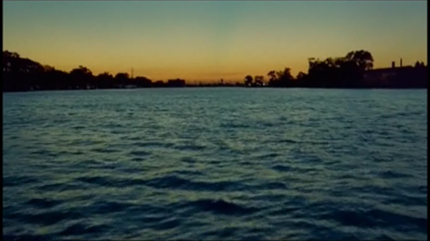 | Mirror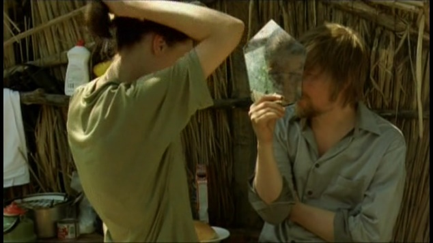 |
| Viharsarok (Császi Ádám, 2014) | |
The moment of return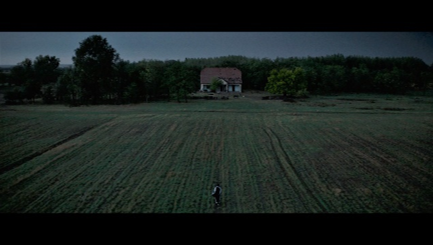 | Mirror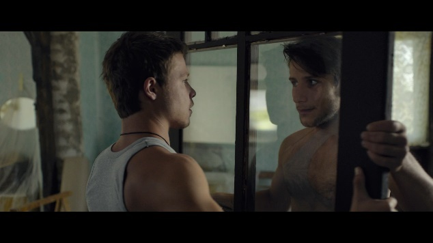 |
| Bibliothéque Pascal (Hajdu Szabolcs, 2010) | |
East 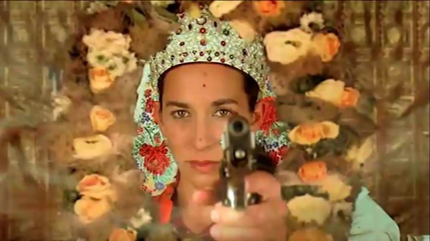 | West (non-place) 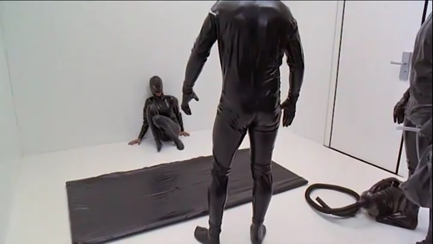 |
| Viktória, a zürichi expressz (Men Lareida, 2014) | |
East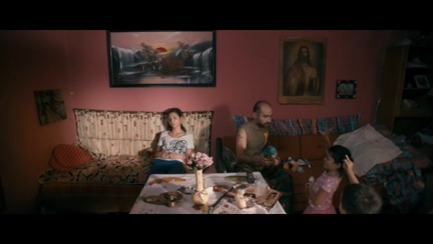 | West (non-place) 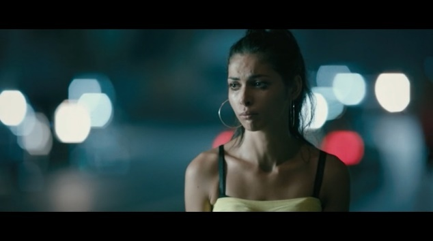 |
| Fehér tenyér (Hajdu Szabolcs, 2006) | |
Dongó’s subjective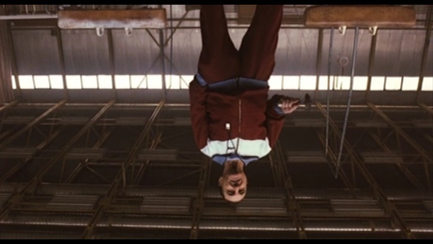 | Wounds 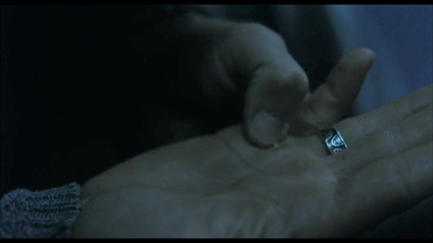 |
| Friss levegő (Kocsis Ágnes, 2006) | |
Fresh air (Viola) 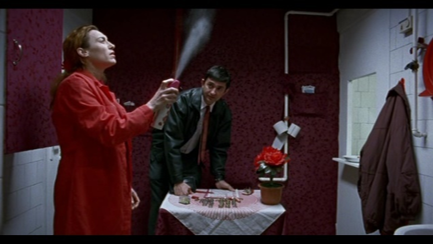 | Angéla’s school 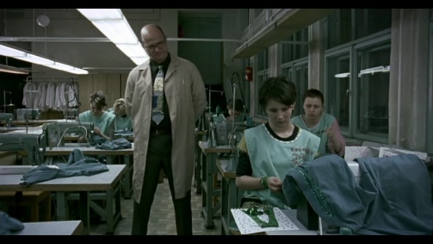 |
| Places and non-places | |
| Fehér tenyér (Hajdu Szabolcs, 2006) | |
Hungary 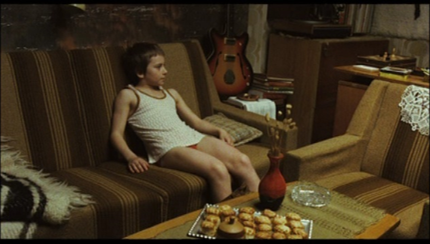 | Canada 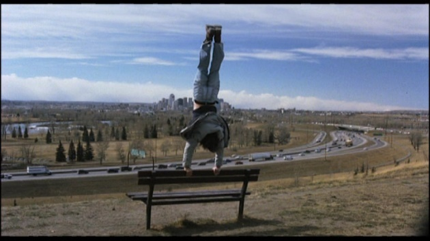 |
| Friss levegő (Kocsis Ágnes, 2006) | |
Hungary 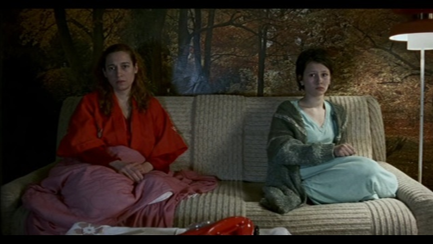 | On a highway to Italy 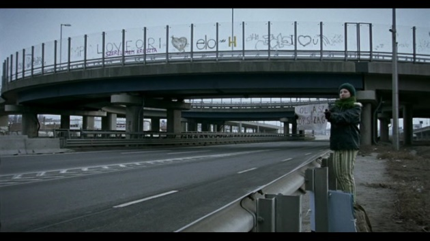 |
| Moszkva tér (Török Ferenc, 2001) | |
Hungary, 1989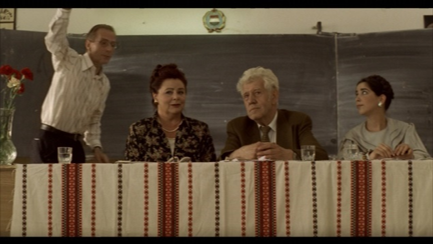 | Vienna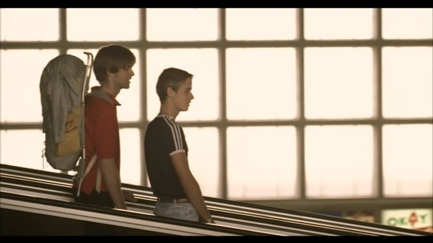 |
| VAN valami furcsa és megmagyarázhatatlan (Reisz Gábor, 2014) | |
Budapest, Easter feast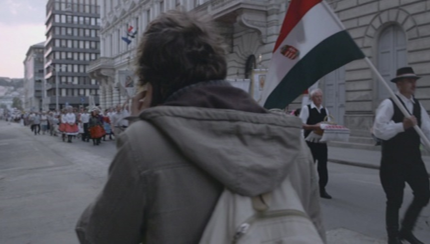 | Lisbon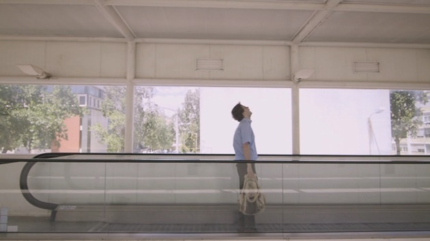 |
| Reisz Gábor: Rossz versek (2018) | |
Budapest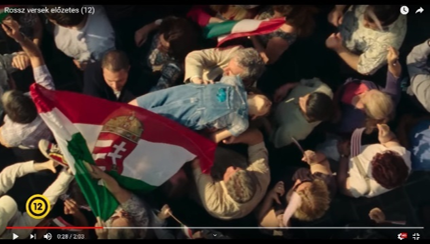 | Paris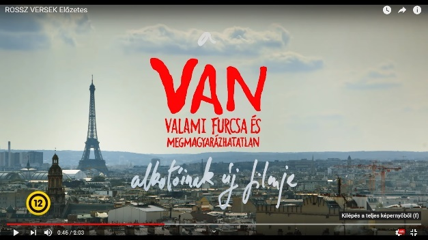 |

 Babos Anna